Project summary
This South initiative project is a Belgian-Palestinian collaboration funded by the VLIR-UOS (2025–2027).
The project comes in response to the severe weakening of the capacities of academic and health institutions following the conflict in Palestine, limiting resources for data collection, evidence-based interventions, and personnel training.
In this project, we aim to implement sentinel surveillance through the development of a web-based Palestinian Sentinel Network Platform (PSNP) that will reinforce the capacities of academic and health institutions in Palestine, for reliable data collection and the generation of research-based evidence. During the conflict, healthcare workers (HCWs) are facing important challenges that would significantly affect their mental health. Systematic data collection through PSNP will provide early signs of mental health issues and will promote evidence-based interventions. In the long term, the PSNP can enhance health resilience and academic sustainability in a conflict environment. It can be expanded to monitor various health issues, ensuring continuous follow-up and improvements in healthcare.
KU Leuven – Centre for Environment & Health
The Centre for Environment & Health is part of the Department of Public Health & Primary Care at KU Leuven. Its mission is to investigate the interactions between environment (occupational, chemical, physical, social) and human health across ages and settings, combining environmental toxicology, occupational medicine, epidemiology, psychology, preventive medicine, and public health. The centre brings together closely related laboratories and expert teams that work on exposure assessment, toxicological evaluation, occupational and environmental medicine, youth health, well-being at work, among other fields.
Contact:
Lode Godderis, Professor of Environmental & Occupational Health: lode.godderis@kuleuven.be
Aziza Menouni, Research Associate: Aziza.menouni@kuleuven.be

Al-Quds University is a leading Palestinian higher-education institution, located in Jerusalem, with campuses across the West Bank. It offers a wide range of undergraduate, graduate, and professional programs in fields including medicine, engineering, natural sciences, social sciences, and humanities. The university emphasizes research, community engagement, and the development of human capacity to address local and regional challenges. Through collaborations with international universities and research centers, Al-Quds University supports innovation, knowledge exchange, and the advancement of science and education in Palestine.
Contact:
Prof. Nuha El Sharif, Professor of Public Health
nsharif@staff.alquds.edu

IDEWE is Belgium’s largest external service for prevention and protection at work, supporting more than 35,000 employers and over 870,000 workers across all sectors. With a multidisciplinary team of experts in occupational health, safety, ergonomics, psychosocial well-being, and environmental hygiene, IDEWE provides evidence-based guidance to create healthier and safer workplaces. Headquartered in Heverlee and active through multiple regional offices, the organisation combines practical prevention services with scientific expertise to help companies manage risks, comply with regulations, and promote sustainable worker well-being.
Contact:
Prof. Dr. Lode Godderis, CEO
Lode.godderis@idewe.be

VLIRUOS
VLIRUOS is the development cooperation branch of the Flemish Interuniversity Council, connecting higher education institutions in Flanders with universities and colleges in the Global South. It supports collaborative projects among professors, researchers, and lecturers, and provides scholarships and grants to students and professionals. Through long-term institutional partnerships and project-based cooperation, VLIRUOS aims to strengthen capacity in partner universities, promote sustainable development, facilitate knowledge exchange, and foster academic solidarity across borders.
Contact:
An Hasendonckx, Financial Advisor – Global South
ann.hasendonckx@kuleuven.be

Objectives
In this project, we aim to establish PSNP as a strategic step towards long-term health resilience in a conflict environment. The reconstitution of academic know-how is vital for sustaining innovation, education, and community well-being.
Specifically, we seek:
- Co-created Knowledge and Skills Application by equipping students, researchers, and staff with relevant co-created knowledge and skills, allowing them to efficiently use the sentinel platform and contribute effectively to the well-being of the community in general.
- Needs-oriented, high-quality research capacities of the partner university will be strengthened. We also foster, using digital tools, a resilient and adaptive institutional environment for continuous learning and innovation.
- Enhanced Quality and Inclusivity in Education by adopting tailored research and sentinel training program
- Science-Society Partnerships for Impact, ensuring the uptake of new knowledge and innovations by policymakers, civil society, HEI, NGO, and healthcare stakeholders.
- Strengthened Organizational System and Sustainability via PSNP that introduces a scalable software infrastructure for real-time data collection and analysis, alongside standardized screening protocols.
The project also aims to contribute to sustainable development:
Sustainable Development Goals (SDG)
Work packages & Deliverables
- A network connecting Belgian and Palestinian academicians, researchers and health professionals
- A collaborative web-supported platform providing training modules, collaborative tools, and enhancing data management capabilities.
- Training modules developed according to the Palestinian needs and focusing on the sentinel surveillance approach, its applicability in public health research and systems thinking perspectives.
- ToT (Train-the-trainer) for data collectors
- Feasibility study for the platform check
- Optimized local network for better uptake and ownership
- Scientific publications showcasing the results of the research.
- Health Resilience and Academic Continuity
- Science-policy interface
- Real-time monitoring & Predictive analytics
- Embeddedness into local and national health systems
- Joint governance structure (Flemish and Palestinian universities)
- Participation to international and national conferences and events
Team Members
A multidisciplinary team bridging occupational health, public health, policy, and surveillance.
Lode Godderis
Nuha El Sharif
Aziza Menouni
Muna Ahmead

Kaoutar Chbihi
Hani Matar
Shahenaz Najjar
Haneen Al-Rjoob
Anke Boone
Lode Godderis
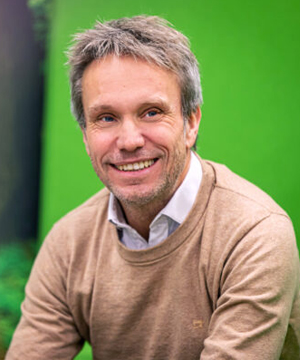
Lode Godderis, MD, PhD, is a Full Professor of Occupational Medicine and Toxicology at KU Leuven and CEO of IDEWE, Belgium’s largest external service for prevention and protection at work. His work lies at the interface of occupational health practice, epidemiology, and public health, with a strong focus on translating research into preventive action. A central pillar of his expertise is the development and implementation of sentinel surveillance systems to detect emerging occupational and environmental health risks. Recently, he has increasingly emphasized mental health and psychosocial risks at work, promoting data-driven strategies to prevent burnout and protect workforce resilience.
Nuha El Sharif
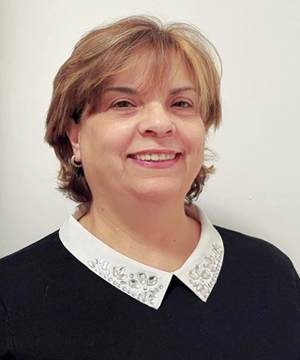
Nuha El Sharif, BSc, MPH, PhD, is a Full Professor of Public Health at Al-Quds University with extensive experience in environmental and occupational health and the epidemiology of chronic diseases. Her work spans asthma, allergies, cancer, diabetes, gestational diabetes, iron deficiency, medication misuse, and lead exposure in children, with a strong interest in indoor and outdoor environmental exposures. She also brings years of expertise in mental health research among healthcare workers in Palestine, focusing on stress, depression, anxiety, and strategies to mitigate occupational burnout and promote well-being.
Aziza Menouni
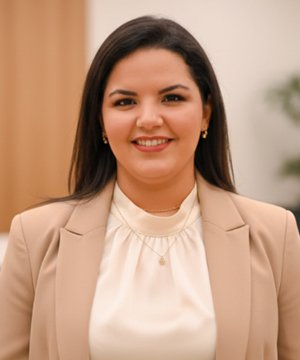
Aziza Menouni is an associate researcher at KU Leuven specializing in environmental and occupational health. Her research focuses on exposome-oriented approaches, human biomonitoring, oxidative stress, and epigenetic mechanisms, with particular attention to vulnerable populations in low- and middle-income settings. Her work increasingly emphasizes sentinel surveillance systems as early-warning tools for prevention and policy support and integrates biopsychosocial risks at work to understand combined effects on mental and physical health. She contributes to research capacity building and international cooperation across large EU-funded projects.
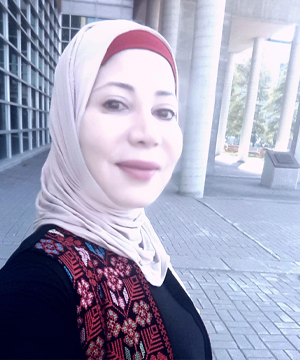
Muna Ahmead
Dr. Muna Ahmead is an Associate Professor of Mental Health at Al-Quds University and coordinates the Master’s Program of Community Mental Health (Psychotherapy Track). She earned a PhD from the University of Manchester and specialized in cognitive behavioral therapy at Hadassah Ein Kerem Hospital. She has helped create new academic tracks and organized psychotherapy training courses for mental health professionals. Her research focuses on workplace mental health, students’ mental health, and psychological challenges in conflict settings.
Kaoutar Chbihi
Kaoutar Chbihi is a PhD researcher at KU Leuven specializing in environmental and occupational health, with emphasis on exposure assessment, endocrine disruption, and epigenetic effects. She contributes to human biomonitoring and methodological advances in capturing and interpreting occupational and environmental health data. She also supports project management and capacity building through Erasmus+ and Joint Actions projects, strengthening collaboration between European and partner-country institutions.
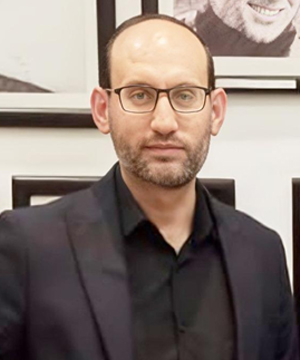
Hani Matar
Hani Matar is a PhD researcher in public health at Al-Quds University with over two decades of experience in health systems, health service management, and public health surveillance. He has held senior leadership roles in the Palestinian health sector and NGOs, focusing on primary health care, quality improvement, governance, and monitoring frameworks. He currently supervises primary healthcare centers under the Ministry of Health, leading data-driven needs assessments and standardized care protocols.
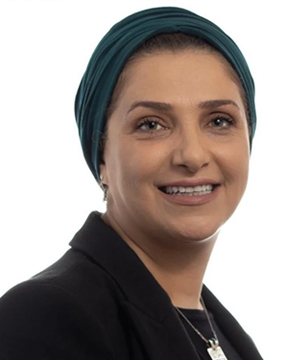
Shahenaz Najjar
Shahenaz Najjar, PhD, is a health policy and public health researcher associated with KU Leuven and serves as a senior research consultant and adjunct professor in Belgium. She holds a doctorate in Biomedical Sciences specializing in healthcare management and health policy. Her work spans health policy research, health informatics, patient safety, and population health using mixed methods, with experience in diverse settings including the Middle East.
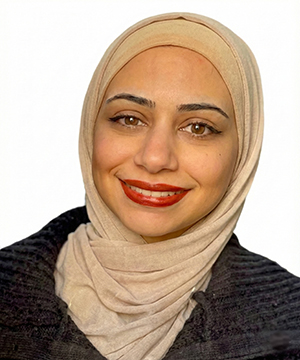
Haneen Al-Rjoob

Haneen Al-Rjoob is a PhD candidate in public health at Al-Quds University. She holds a bachelor’s degree in public health nutrition and a master’s degree in Food Technology and Nutrition. She has more than ten years of experience in public health nutrition in government and private sectors and is currently engaged in doctoral research emphasizing evidence generation to support public health practice, health systems, and policy.
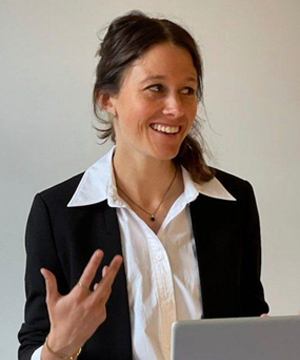
Anke Boone
Anke Boone, PhD, is a researcher at KU Leuven specializing in work-related mental health, psychosocial risks, and sustainable employability. Her research addresses stress, burnout, work ability, and well-being using epidemiological and longitudinal approaches. She is known for co-creation and participatory research, involving workers, employers, and policymakers to develop feasible, context-sensitive interventions and strengthen the translation of evidence into practice.
Advisory Committee
Independent strategic, scientific, and ethical guidance to strengthen quality, credibility, and impact across the PSNP lifecycle.
Strategic oversight and independent assurance
The Advisory Committee provides strategic, scientific, and ethical guidance throughout the PSNP lifecycle. It supports the project team in ensuring methodological rigour, contextual relevance, and alignment with national and international priorities, while offering independent advice to strengthen the quality, credibility, and impact of the project.
Key responsibilities
- Advise on study design, indicators, and methodologies.
- Review progress and guide responses to implementation challenges.
- Ensure ethical standards, data protection, and participant safeguarding.
- Support knowledge translation, policy relevance, and scale-up strategies.
- Facilitate linkages with national institutions and synergies with local and international initiatives.
Multidisciplinary expertise
Members are invited based on their experience, independence, and knowledge of the local and regional context.